
Category: Uncategorised

  • Introduction

    Introduction

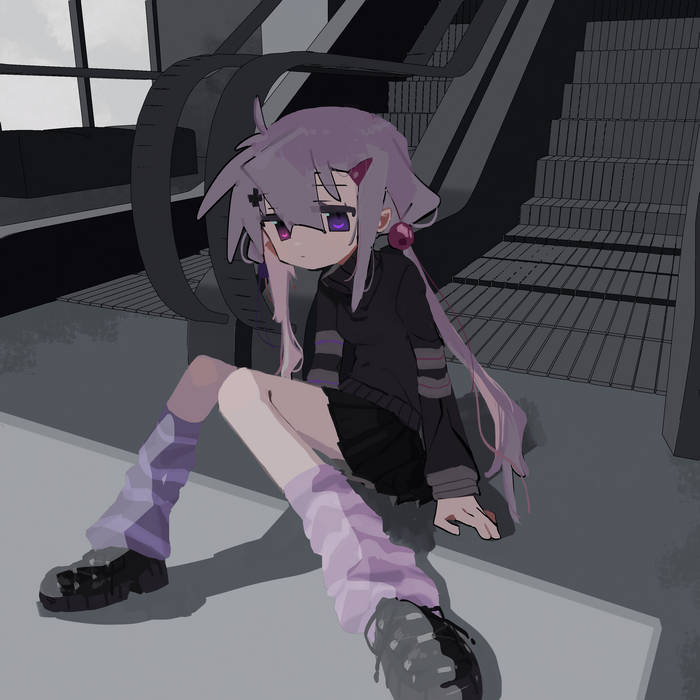
    Hi my name is Mykul/June and I’m a music producer of 5 years and visual artist of 6 years (whilst also being an intermediate vocalist, guitarist and pianist). I don’t like to have a defined music production style since I always enjoy stepping outside of my comfort zone, though genres I would describe myself with are lofi, hyperpop, digicore, shoegaze, indie rock, ambient, edm and glitch. I’m very inspired by internet aesthetics and subcultures with artists such as Quadeca, Jane Remover, Porter RobinsonEDEN and Joji being big inspirations for me in both my music and my visual style. I have released one song officially so far called 8teen and for now it serves as my artistic portfolio as it shows a very high point in both my music capabilities and visual capabilities (especially the second half of the song which is the best thing I’ve ever made in my opinion). 

    8teen by mykul

    SKILLS AUDIT

    DAW: 5 
    I am very confident in Logic Pro X, it’s what I’ve been using from the start, and I’ve become very loyal to it. 8teen is a very clear example that I know my way around the software. I also do have experience in FL Studio since I must use that sometimes in certain situations. 
     
    Recording Techniques: 4 
    My own experience alongside taking A level Music Technology makes me very confident in recording techniques. Especially as of recent I’ve been recording my vocals and guitars more than ever (my SoundCloud recently has housed many of these tracks, link below). I still feel like there are a lot more things I could learn but I believe I am confident in recording.  
     
    MIDI Sequencing/Programming: 5 
    With the list of genres I am very inspired by, MIDI is a very big part of almost all of them so understanding it was a must. Most tracks I make and put out today are very MIDI centric with a guitar, vocal or maybe even a melodica or ukelele recorded in. I’m also very confident with the MIDI transform tool in Logic using it heavily to create more interesting MIDI clips. 
     
    Sampling and Synthesis: 4 
    This year I put a heavy focus on sampling and synths. My sampling was fine before however I fell into the trap of needing everything to be unique, however now sampling has been normalised due to me understanding the process of some of my favourite songs (such as when Jane Remover broke down their album Frailty). On the other hand, my synthesis improved drastically this year, I’m very inspired by dubstep-like, growly sounds so that really pushed me to have a deeper understanding of how to create synths. I feel like I’m very close to reaching my ideal skill level in synthesis but for now I still want to improve on it. 
     
    Mixing and Effects Processing: 5 
    My mixing has also improved drastically this year, very likely due to the A Level Music Technology Component 1 and 2 submissions as well as 8teen since all 3 songs required a good mix to get a good grade/good reception. I have also mixed songs for a few friends in the past. However, effect processing is the strongest part of my musical skill set. Most sounds in my songs are just normal instruments put through insane effect racks to create very glitchy, crunchy, spectral sounds. Effect stacking in a very important part of my workflow as it very often leads to new ideas that can be used elsewhere in the song or in another song entirely (fall is a big example of this since some glitchy sounds lead to cool ideas). 
     
    Critical Listening/Analysis: 4 
    Like my mixing improvement, A Level Music Technology really forced to have a critical listening ear. Sometimes I catch myself hyper analysing every piece of my favourite songs trying to piece together how they work at all. 
     
    Collaboration/Communication: 2.5 
    This is something I really want to improve on this year. I rarely collaborate with anyone simply because I don’t like to ask. I’ve already started changing that with me now entering production events and having more collaborations lined up whilst also starting to collaborate with some long-time production friends. 
     
    Organisation/Workflow: 3.5 
    I can be insanely unorganised at times, I am a very forgetful person in general, and this can and has affected me many times before. However, this inorganization has led to a workflow pattern where ideas can morph on their own and find their own identity. Of course, sometimes I go into songs with a plan to make a certain kind of song (long day and sickrn (unreleased) are examples of this) but I find that letting songs develop on their own, birthing from a single idea, can be a much better writing device than trying to follow a script. 

    https://www.youtube.com/@CTSCSmykul
    https://soundcloud.com/ctscs
  • woodside gardens 16th december 2012 by Jane Remover

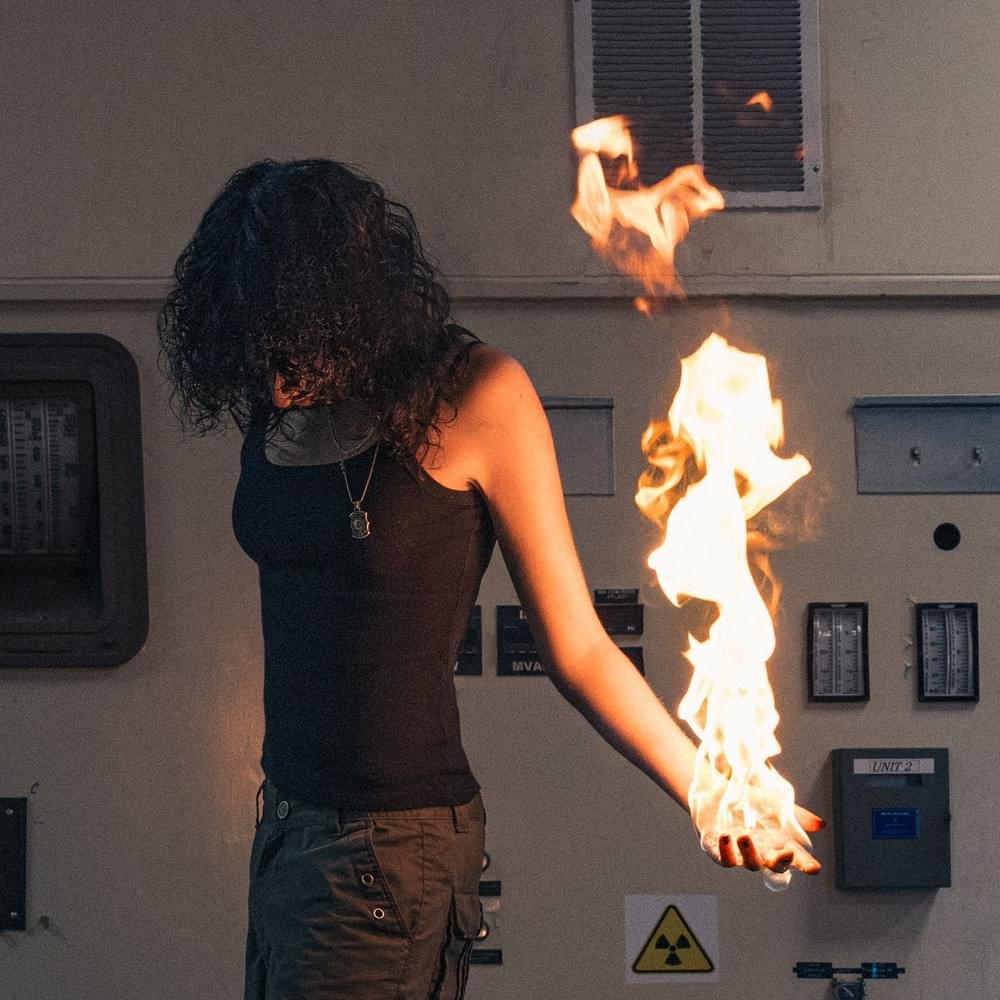
    Jane Remover is a trans artist infamous for pushing genre boundaries and has been named the face of digicore by Pitchfork and FADER. Ever since they released the EP Teen Week in 2021 at only 17 years old, major publications have been keeping a close eye on them and that only ramped up more with their debut album, Frailty, blowing everyone away and really forcing everyone to pay attention to them. Woodside gardens 16 december 2012 is a song on Teen Week that was released during a difficult point in their life (according to Jane when talking to Pitchfork) and perfectly encapsulated the emotions and social othering Jane felt during this time. 

    Immediately, the song kicks off with a melody layered by a sample of some people laughing to each other before some hard 808s come in and the melody sounds like something right out of an old Pokémon game. Sounds like these are used to create a nostalgic feeling which is a cornerstone of digicore production, another digicore artist and friend of Jane’s, d0llywood1 (when talking with iD) described digicore as “digital kids who met over the internet” making music that “sounds like s*** we found on the internet.” When the vocals come in, they are very crushed and autotuned which is another digicore trope. The robotic nature of the vocal juxtaposes Jane’s very soft voice underneath all of it, which comes from not wanting to disturb others in their family home. The lyrical content also juxtaposes the very happy-sound melody playing behind them. With talks about bad friends, self-loathing and anxious thoughts. Jane has opened many times about their less-than-idea school life and anxiety. With the former, they’ve talked about how reliant they are on the internet, telling Pitchfork that they’re “so terminally online that it hurts.” In the report Jane also mentions how bullying in their politically conservative town’s middle school led to them “acting more masculine” and tried to fit in but “still felt estranged.” This fits in directly with lyrics, most notably “shut up f*****, bury the hatchet, they won’t like you unless you’re acting.” 

    At 1:44, the song erupts into a fast breakbeat accented by a soft piano, whirling synths and soft vocal harmonies, not forgetting the infamous Bodies by Drowning Pool scream sample. This is deemed as one of Jane’s most compelling additions to the digicore sound as (according to a separate Pitchfork report) they are used to “express the all-consuming anguish of adolescence, heartbreak and dysphoria” that helps others “understand their queerness.”

    In short, woodside gardens 16 december 2012 is a song that really defines the queerness of digicore, presenting its very intoxicating internet aesthetics whilst still presenting a very real, queering identity. 

  • Workshop 1 : Experimental Production

    When making my song. I wanted to really focus on the synths and the vocals. However, I wanted to start with how Jane Remover started their songs with a guitar when making Frailty.

    After I laid that down and put effects on it I started adding a myriad of crunchy synths to get a large feel. I then sound designed my own drums to give them that electronic feel then finally added vocals (which i decided to layer with a guitar part to make it feel whole).

    I did the very whispery vocal style Jane does is Teen Week and Frailty, but I rushed my vocals, so they were one takes that I fixed using the FLEX tool in Logic.

    I wanted to extend this drop for another phrase but I wasn’t sure how, however, many times Jane Remover has said that Porter Robinson was a very big inspiration and their idol when making both Teen Week and Frailty so I decided to first put in a sample of Porter Robinson’s Is There Really No Happiness as well as make the second phrase of the song be a resampled, chopped up version of the first phrase.

    I processed my vocals differently to create a very broken robot sound and the instrumental (minus the drums) followed to create this glitchy beat that is only being kept together by the drums which I really liked. I really like this way of producing, resampling yourself to create something new yet familiar, since it creates a very unique feeling that other techniques can’t really do.

    Ever since I made this song, I’ve been experimenting more with sampling myself both within the same song and across different songs to see what works and what doesn’t. The vocal chop processing is also something I have carried over to other projects since the effect layering of a heavy bitcrusher with a low resolution and a very heavy distortion saturates the sound in a way I haven’t seen (like OTT however much glitchier and more interesting). 

  • GOD SAVE THE QUEEN by Moor Mother

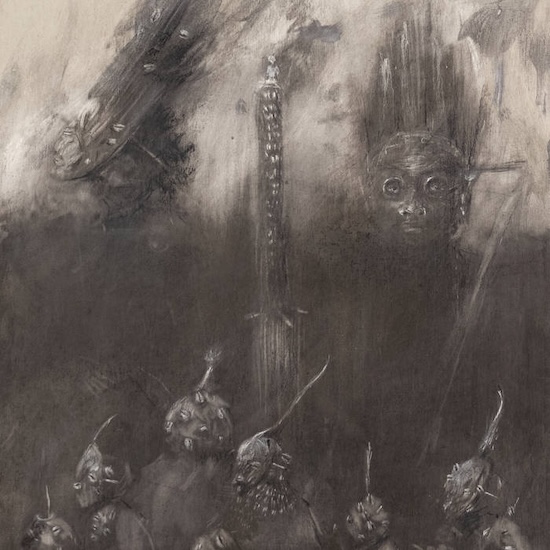
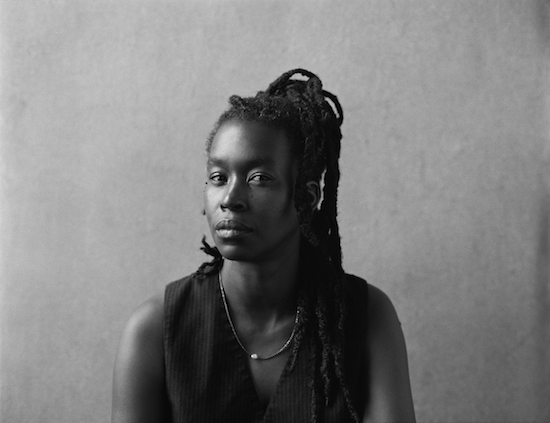
     Moor Mother is an American musician, poet and activist who is well known for her very political songs which birthed genres such as Afrofuturism. The song GOD SAVE THE QUEEN comes of the album The Great Bailout, which is an album describing “the knotty relationship between Europe and Africa” according to Pitchfork. The project came about when Moor Mother was asked to create a theme with an orchestra for the Tusk Festival. When talking to Walker, she states: “At that moment, when I was thinking what I could do, I felt it was imperative to focus on a historical moment that still has its residue, or remnants, here in the present.” 

    When talking to The Guardian, Moor Mother says: “As an African, our story runs all through the UK. I’m following the threads: what has happened to us, how we have to overcome it.” This theming of the UK can be seen prevalently in the song GOD SAVE THE QUEEN from the title alone, since it recycles the British national anthem however the Queen had been dead for over 2 years by the release of this album. 

    On this spoken word song mixing jazz and experimental drums, Moor Mother speaks about the Queen’s controversial past. RA describes the song as a “satirical plea for the safety of the Queen and all her stolen riches.” Lyrics such as “God save the Queen, because who else’s life has value,” and “Has her plantations been saved, Oh, God, thank you, God,” show this very ironic view of the royals, clearly showing how – according to The Daily Campus –  Moor mother is “critiquing the institution of royalty and how, to some, their lives are more valued than others.” 

    The instrumental itself is very trance-like, as if to represent how a large chunk of the UK populations sees the Queen, almost as if they are hypnotised into forgetting her past and worshipping her as a god. RA says that the “discordant chords, trap percussion and spiralling sax culminate into a nightmarish version of the [British] anthem.”

  • Workshop 2 : Moor Mother

    The main thing I took from listening to Moor Mother is the very eerie ambient tone that the songs can have. I wanted to keep this ambience whilst also having punchy drums to drive home the message.

    I began with making the drums, using a preset drum kit that I had made in the past and added heavy distortion to it. I then added the speech; I used the “I have a dream” speech by Martin Luther King Jr and began chopping the sample up, taking some powerful lines that still had some quality to them. I then processed them, using the outro of DANCING WITHOUT MOVING by Quadeca as a reference for the static, radio effect I wanted.

    Once i had made this effect using heavy compression, EQ and effects such as Deelay (a unique delay plugin) and bitcrushers I wanted to use the cheers heard in the speech, so I put them through a shaper plugin to add a pumping rhythm at the end of the loop. I then made a reese bass by lowing the pitch of a saw wave and raising the unison. I cut off the top and added some white noise to fill it out with heavy distortion to heavily saturate it. I then added a very glitched out piano that is only almost following the beat to give a weird, uncanny valley-like sound. I made this by putting half-time and codec on the piano to crush the sound into a coherent yet glitchy mess. To finish it up, I added a quiet violin that is played in such a way where it mostly can’t be heard until a very resonant frequency is brought up, making it very noticeable.

    This way of working really put emphasis on the drums creating not only the groove, but the vibe (which are normally left to the chords and sound design I do).

  • Airstrike by Nazar

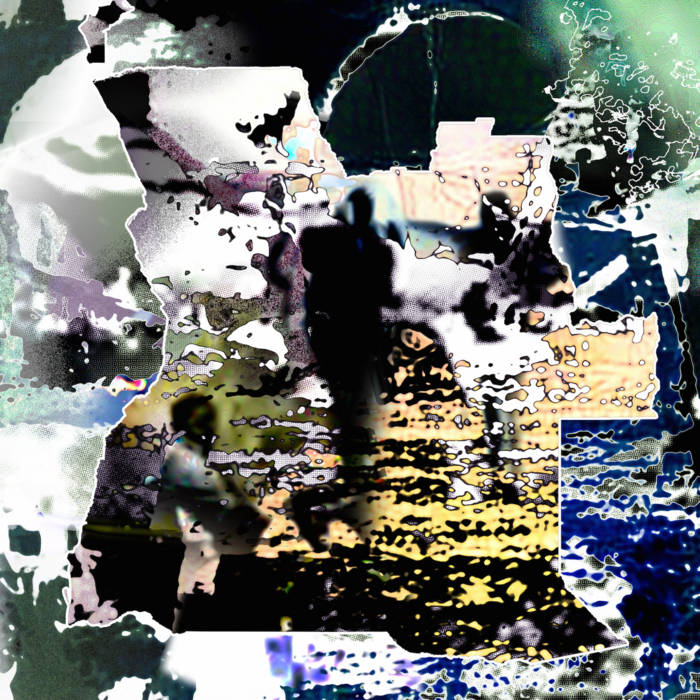
    In Nazar’s song Airstrike, synthesis and sampling techniques are used to create a feeling of a warzone. The Enclave EP, which houses Airstrike, was made as a reflection upon the 27-year Angolan Civil War according to the EP’s bandcamp description. According to Factmag, Nazar comments on how Airstrike in particular is “recounting the stories of numerous airstrikes endured by his mother, aunties and older sisters.” To match this apocalyptic feeling, Factmag describes the EP as having “aggressive, militaristic sound design” and mixing that with traditional Angola kurudo music (which Nazar has dubbed “rough kurudo.” 

    Airstrike is very heavy handed when it comes to sampling, however there are no entries on WhoSampled for Nazar, meaning there are many samples of which we don’t know the origin of, such as the one at the beginning of the song (however we could infer this could be a family member of Nazar since, on the closing track Ceasefire, there is an audio of Nazar’s father reading his war journal); the publication Self-Titled makes a link between Nazar and the “weaponization of sound” so many sampled sounds are taken from war. The most noticeable sample being the gun clocking sound effect that makes up most of the percussion and is very important in creating the groove for the song. This was made by chopping up the sound effect and rearranging the chops to create a rhythm. There are also many samples placed around to create the atmosphere of a war, with airstrike sounds being heard and sirens blaring for the majority of the second half. Nazar’s name alongside other ghostly vocal samples are also plastered all over this song and is incorporated into the groove to create a very eerie vibe that Beggar’s Music describe as “raw, thrilling and unsettling.” 

    The sound design also stays within the theming of an apocalyptic warzone, with the main bass synth that plays for the majority of the song sounding like the feedback you get from a faulty connection – essentially electrical static. This sound evolves throughout the song using automated distortion to strengthen and weaken the effect to create different sections. In the second half noisy supersaw alarms start swarming and taking up the mix. Alongside the gun clocking and vocals samples there are some simple electric drums in the song, however these drums can be very difficult to follow at times, adding the very unsettling nature of the song since you don’t know what is going to happen next. 

    Every sound used in the song sounds faulty or broken and creates the very uninviting atmosphere all these publications have been talking about.

  • ultraviolet by usedcvnt

    Violet (artist name usedcvnt) is a breakcore producer birthed during the breakcore resurgence of the early 2020s. Categorised by artists such as Goresh*t and Machine Girl, modern breakcore is defined by its heavy ambient, digicore, dariacore and EDM influences, merging fast chopped up amen breaks with very soft chords and melodies on top. This very sudden change in what “breakcore” meant was met with heaps of controversy with bandcamp making a report on how “some feel like the term has been diluted to the point of a pure aesthetic,” and x.nte, a breakcore artist, says that “the bending of breakbeat, glitching it out or incorporating different sounds, it feels like this has been lost.” Ultraviolet tries to merge these two camps, making an album that pertains to its 2020 themes of “embracing anime and video game-inspired sounds and aesthetics” according to The Georgetown Independent; whilst also still pertaining somewhat true to the hardcore origins of breakcore and even trying to push the genre forward with new production ideas. 
     

    Violet first sprouted onto the breakcore scene with their slightly derivative song “sorry mom, im making berakcore xd” blowing up on TikTok. Not much about them is known apart from being a musician and drawings she makes and commissions of their character which is essentially their mascot and front for all their work (as seen on the album cover of ultraviolet). The only piece of information on Violet is from their Twitter in which they speak about how, during the creation of this album, they were dealing with severe mental health issues and had heavy anxieties about the album not meeting expectations. However, this was the most successful release ever for Violet with 1 million album streams within a week but got mixed reviews with some saying the album was a very fun listen whilst others complained every song sounds the same on sites such as Album of The Year

    Actually listening to the album, the criticisms are slightly justified with many songs sounding like the preset chopped amen break, synth pad and unison reese bass that many people call “bogus” according to Nina. However, there are many songs on this album that try to push the new wave forward as well as pay homage to older breakcore. 

    Songs such as yours forever show a much grander take on what can only be described as a very lofi genre. Collaborating with abyssal angel and sampling vocal chops from a remix of Caramelldansen, these artists add so much more to the genre to create a very etherial song. Taking many notes out of the album Nurture by Porter Robinson the final instrumental passage mixes elements of the botanica present on that album and mixes them with this breakcore (the song Unfold on the album Nurture seems to be the biggest inspiration however other songs such as Look At The Sky and Musician seem to also be big inspirations for yours forever). The addition of vocals to this song also add to this wide and grand feeling, being very reverbed and spacious. This song really encapsulates the future of the new wave on breakcore artists. 

    On the other hand, the song i want to eat ur heaty couse i love you, whilst a lot softer than its much older contemporaries, brings back the unpredictable nature of early 2000s breakcore with very glitchy breaks for much of the song and no clear beat to follow. In the documentary Notes On Breakcore, Hrvatski, a breakcore producer, described the genre as “dance music you can’t dance to” and “complex and impossible to follow, how could you ever dance to this?” and that is the feeling this song brings whilst staying within the normal production techniques of the album.

  • Workshop 3 : Breakcore

    I have a lot of prior experience making breakcore-influenced production, so I employed my usual workflow whilst pertaining to both ultraviolet but also Paranoia by KENTESHI.

    I began with the drum break, beginning with drums is very unusually for me but I like to start with the focal piece of my songs so, when making breakcore, this is normal. I put an amen break I have into the Logic quick sampler and set it to slice so I would get all the individual drum sounds on the piano. Then started placing them in, glitching them out using techniques such as velocity ramps and pitch bending but not making the song unfollowable to match the new wave of breakcore artists.

    I then brought in a synth pad preset that I had made a while ago and wrote some chords. After which I created a bass using an 808 preset I made and raising the unison and sustain to create a reese-like bass. I then added a sample from the song third eye by the pillows and pitched it up for a vocal on the song. Once I added a few guitar parts since that was something toyed around with by older breakcore artists (such as Drumcorps which he speaks about in the Notes On Breakcore documentary) and some simple layers to fill out the song it was done.

    The breakcore workflow is very unique since, like the Moor Mother track, the focal point are the drums and everything should surround and support them which is very backwards compared to my usual workflow; however its a change I always accept since it leads to very unique results.

  • Gender In Music Production by Hepworth-Sawyer, Russ (2020)

    This book is a very interesting read focusing on the sigificance of gender within music production, specifically how women “still haven’t left the blind spot of the public eye” and that males and females are always “quietly suspicious” of each other in musical settings.

    The book focuses on a female solo artist named Where Did Nora Go (the name being a reference to a feminist play) during the chapter “Women In The Studio” to portray their greatest points about how unequal the playfield was for women in music production. The “pitfalls in gender relations” this chapter touches on surrounds how men’s self-proclaimed superiority in the past have deemed many technical and creative parts of music production as “a man’s job,” and how frustrating it can be for women to be seen as “lesser” by some in the studio. Where Did Nora Go was a great case study as it pryes deep into the systemic problems with how 21st century women were (and still are) treated within “patriarchal discourse.”

    The writer themselves is a producer and recounts his experience with working alongside Where Did Nora Go and talks about how his long partnership had made him start to question some of his past working habits and see “how I could do my thing, so to speak, without reproducing too many of the male gendered stereotypes of the music business.” He goes onto talk about how, when working with Where Did Nora Go and another producer helping named Rasmussen, while it did create a good, creative energy in the studio, the writer points out that it also “created a sense of exclusion,” due to his and Rasmussen’s “homosocial oriented values” which can inherently exclude women from connections. This with years of history stacked up creates a feeling that studios are men’s spaces that women want to go to, but don’t feel invited into.

    This book is not only rooting for a growth in accepting women into the studio, but the writer themselves understands that the industry can teach these misogynistic beliefs to male producers and even he has fallen victim to this. A critisism I have for this book is that it does homogynise sex and gender into one which erases producers who are outside of the gender binary, especially in 2018-2020 when many artists started poking their head out. However, for the more simple conversation regarding men and women, this book shows not only the systemic and historical issues with how women are treated in the studio, but also lived experience and reflection on how someone can grow and make the studio space more inviting for anyone.

  • Reflection On This Unit

    During this unit, I have learned how to source and refer to information and use them alongside my own understandings of the material to create a piece of writing that is backed up by  numerous sources. These new skills will greatly help my practice since I can now create better piece of informative, reflective and analytical writing due to this increase in my  researching and writing skills. However, something I would like to  greatly improve in is my range of sources. Many sources throughout this piece of writing have been articles and interviews; I would like to branch out into other forms of writing to research from such  as  books,  but I understand that will take some time for me to get to grips with due to my predisposition to not like big walls of text. On the practical side, I have used many workflows that I haven’t tried before, whilst songs such as the breakcore track were relatively in my ballpark, other tracks such as the Moor Mother track were very different and cause me to think of things from a new angle which is always a fun challenge. Finally, my presenting skills did receive a boost as well, whilst I still think that my presentations had a lot to be desired and I was very critical about my performance whilst presenting, I understand again that things will get better with time and I will have more opportunities to present.  
    Overall, whilst I still believe writing and presenting are my weaker skills compared to practical music production; I think I’ve improved on my skills a lot whilst also understanding I can improve more in the future.